





A passion that lasts
Data on the biography of Wilhelm Kempff (PDF, in German)
Chronicle of the recordings (PDF, in German)
Inventory of Wilhelm Kempff's compositions (PDF, in German)
 25 November 1895 to 23 May 1991
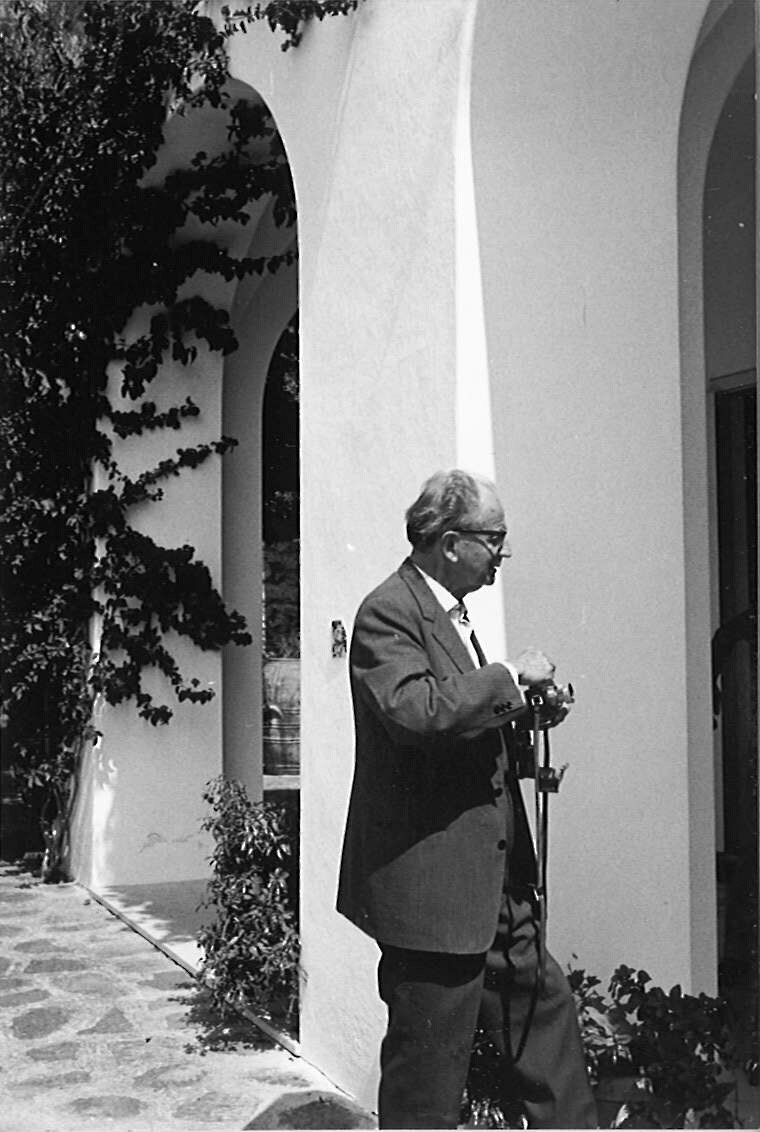
He was a pianist of the century who never saw himself as a star. And a humorous, generous, unpretentious person. His piano playing was as profound as it was natural, his interpretations shone from within. His singular art is documented in many recordings, which stands out from the often vain to radical subjectivism of his colleagues. For this very reason, Kempff became an exemplary interpreter of Beethoven's and Schubert's works, free from fashion. His attitude, his artistic credo also made him the ideal pedagogue, open to everything and everyone.
A contemporary witness remembers
Annette von Bodecker, long-time assistant and companion, reports in twelve chapters on her collaboration with Wilhelm Kempff, the history of Casa Orfeo and their life together.

A contemporary witness remembers
After Kempff's death, the German pianist Gerhard Oppitz led the Beethoven masterclasses from 1992 to 1995. In eight chapters, he reports on the masterclasses at Casa Orfeo and his encounters with Wilhelm Kempff.
A contemporary witness remembers
Luigi Buonocore took over responsibility for looking after the Kempff estate from his parents. Since the 1950s, this responsibility has now been in the hands of the Buonocore family for three generations. Luigi recalls how, as a child, he came to know Wilhelm Kempff and perceived him as a person and an artist, and what impact his work had on Positano.
Interpretations of timeless validity
If you have any questions about the music of Wilhelm Kempff, please contact the Wilhelm Kempff Music Archive.
Wilhelm Kempff music archive:
Akademie der Künste
Musikarchiv
Dr. Werner Grünzweig
Robert-Koch-Platz 10, 10115 Berlin
 030 20 05 73 00 0
 musikarchiv@adk.de